
What does agentic commerce change for fashion and apparel shops?
Agentic commerce in fashion is decided by size, material and the cost of a wrong fit. Before recommending a jacket, an assistant checks that the size exists, what the fabric is and how returns work. In our July 2026 audit, 34 of 45 fashion shops in Romandie lost the most agents at that product data stage.
What the customer sees
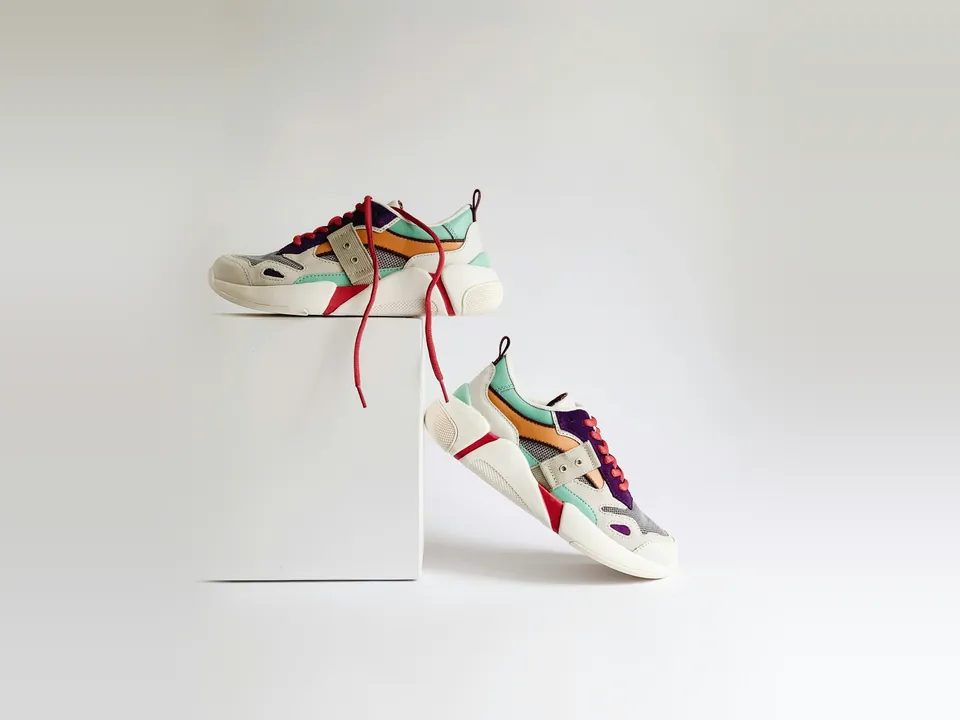
Sneakers
Chunky sneaker, cream and mint
CHF 159.00
What their agent sees
"@type": "Product",
"name": "Chunky sneaker, cream and mint",
"category": "Sneakers",
"merchantReturnDays": 30,
"additionalProperty": { "name": "Size",
  "value": "EU 42" },
"offers": {
  "price": 159.00,
  "priceCurrency": "CHF",
  "availability": "InStock",
  "deliveryTime": { "maxValue": 2 }
}Price, stock and delivery can be compared
Who this page is for
- Fashion brands selling direct, with collections that change every season
- Multi-brand clothing and shoe retailers
- Accessories and jewellery shops where material and origin matter
Usual starting point: Buyer Journey Check
What does a fashion shopper ask an assistant?
A typical request reads like this one: "A waterproof hiking jacket for women, size S, recycled materials, that I can return for free if it does not fit." The agent needs the size in stock, the material composition and the return terms as fields, because those three decide whether it recommends the jacket.
A waterproof hiking jacket for women, size S, recycled materials, that I can return for free if it does not fit.
Which product fields decide the purchase in fashion and apparel?
In fashion and apparel, five fields decide whether an agent can shortlist a product: size system, colour and material, variants, returns, care and origin. The table shows why each one matters to the shopper's request here and, for your developers, how it is declared so an agent can read it.
| Field | Why the agent needs it | How it is declared |
|---|---|---|
| Size system | EU, UK and US sizes differ, and the agent has to match the person’s size | size with SizeSpecification and sizeSystem |
| Colour and material | Shoppers name both in their prompts | color, material |
| Variants | Each colour and size combination has its own stock | ProductGroup with variesBy |
| Returns | The cost of a wrong size is part of the decision | MerchantReturnPolicy with merchantReturnDays and returnFees |
| Care and origin | Recurring questions in follow-up prompts | countryOfOrigin, additionalProperty |
What does the data say about AI shopping for fashion?
Shoppers will hand clothing to an agent but want a say: in the Global Payments 2026 Agentic Commerce Report, 69% of 16,000 consumers in 7 markets would let an agent spend up to USD 100 on clothing and footwear, and 59% would approve every purchase. The Swiss rows below show where shops lose those agents.
| What was measured | Source, date and scope |
|---|---|
| Among 45 fashion, footwear and accessories shops, 34 lost the most agents at product data, and 23 showed their price only as page text. | Autobasket audit of 240 Romandie online shops, July 2026. Switzerland, Romandie, 45 fashion shops |
| In a survey of 16,000 consumers in 7 markets, 69% would let an AI agent spend up to USD 100 on clothing and footwear, and 59% would require approval for every purchase. | Global Payments, 2026 Agentic Commerce Report, reported by FashionUnited, September 2026. 7 markets, 16,000 consumers |
| Home electronics made up 28% of Swiss online sales in 2025, fashion 16%, home and living 15% and food 10%. | HANDELSVERBAND.swiss with NIQ/GfK and Swiss Post, 12 March 2026. Switzerland, share by retailers’ main assortment |
Where does an agent purchase break for fashion and apparel?
We audit fashion and apparel stage by stage, because each stage fails for a different reason. The rows below show the failure we look for first at each stage and what changes once it is fixed, in the order a shopper's request meets them, from the first question to the reorder.
-
Discover
Where it breaks
Collection pages carry a mood image and two lines, with nothing an assistant can quote
What changes once it is fixed
Fit, fabric and care written as text an assistant can cite
-
Understand
Where it breaks
The size chart is an image
What changes once it is fixed
A size chart the agent can match to the shopper’s size, as an HTML table and size fields in the markup
-
Choose
Where it breaks
Return terms are only in the footer PDF
What changes once it is fixed
Return terms the agent can quote on every product, declared as a return policy
-
Buy
Where it breaks
Colour and size selection only works with clicks in a browser
What changes once it is fixed
The agent can put the chosen colour and size in the cart, using an ID and a GTIN for each variant
-
Retain
Where it breaks
The next season replaces URLs, and earned citations point to dead pages
What changes once it is fixed
Citations earned last season keep sending shoppers to you, through stable URLs and redirects when a style changes
Where should fashion brands start?
We usually start this kind of engagement with the Buyer Journey Check. Fashion purchases fail at different stages per category, so the audit shows which collections to fix first. From there, the order of the remaining work follows the stage table above, so each step fixes the next place where agents drop your products.
Fashion purchases fail at different stages per category, so the audit shows which collections to fix first.
What should fashion brands read next?
These guides and worked examples take the questions on this page further for fashion and apparel. Each link names the topic it covers and says in one line why it matters for a shop like yours, so you can open the one that answers your next question rather than reading all of them in order.
- ProductGroup schema for sizes and variants
The markup for size systems, colours and size charts that lets an agent match a shopper’s size.
- How to get your products recommended by ChatGPT
How assistants retrieve and judge product pages, and what makes them quote a fashion shop by name.
- Are Swiss online shops ready for AI agents? 240 shops audited
The audit behind the fashion figures on this page, with all 45 fashion shops grouped by stage.
- GEO vs SEO for online shops
What changes in a collection page when it has to be cited by an assistant as well as ranked by Google.
What do fashion brands ask about agents?
These are the questions teams in fashion and apparel ask us most often about AI shopping agents, answered in full. Each answer stands on its own, so you can forward one to a colleague, and an assistant asked the same question can quote it as it is.
How can my fashion e-shop get recommended by ChatGPT?
Give the assistant the facts shoppers put in their prompts as fields: size with its size system, colour, material, stock per variant and return terms. OpenAI’s help page says ChatGPT reads structured metadata such as price and description and ranks sellers of the same item on availability, price and quality. Fit notes written as text give it something to quote.
How can a fashion brand reduce returns from AI-assisted purchases?
By giving the agent enough to pick the right size the first time: a size chart as an HTML table, the size system on every variant, fit notes such as "runs small" in the text, and the fabric composition. An agent that can match the shopper’s measurements to a declared size has less to guess, and the return policy it quotes is your own.
Can an AI assistant recommend clothing in the right size?
It can when the size is declared with its size system and each size has its own availability. Without that, the assistant either guesses or names a shop that publishes the information, which is why size markup comes first in our apparel plans.
Do return policies affect AI recommendations?
Assistants answer follow-up questions about returns, and shopping agents compare return terms when two offers are close. When your return terms are declared in the structured data as a MerchantReturnPolicy, they answer from your terms rather than from a forum post about your shop.
What happens to AI citations when a collection changes?
If the old product URLs return errors, the citations an assistant had for them are lost. Keeping stable URLs, or redirecting each retired style to its successor, preserves the visibility earned in previous seasons.
Get your fashion catalogue ready for agents
Bring one product page from your catalogue to the first conversation, and we will show you which of the fields above an agent can read today and which one it is missing.